
Guide: when is an inertia base needed under a pump or a fan?
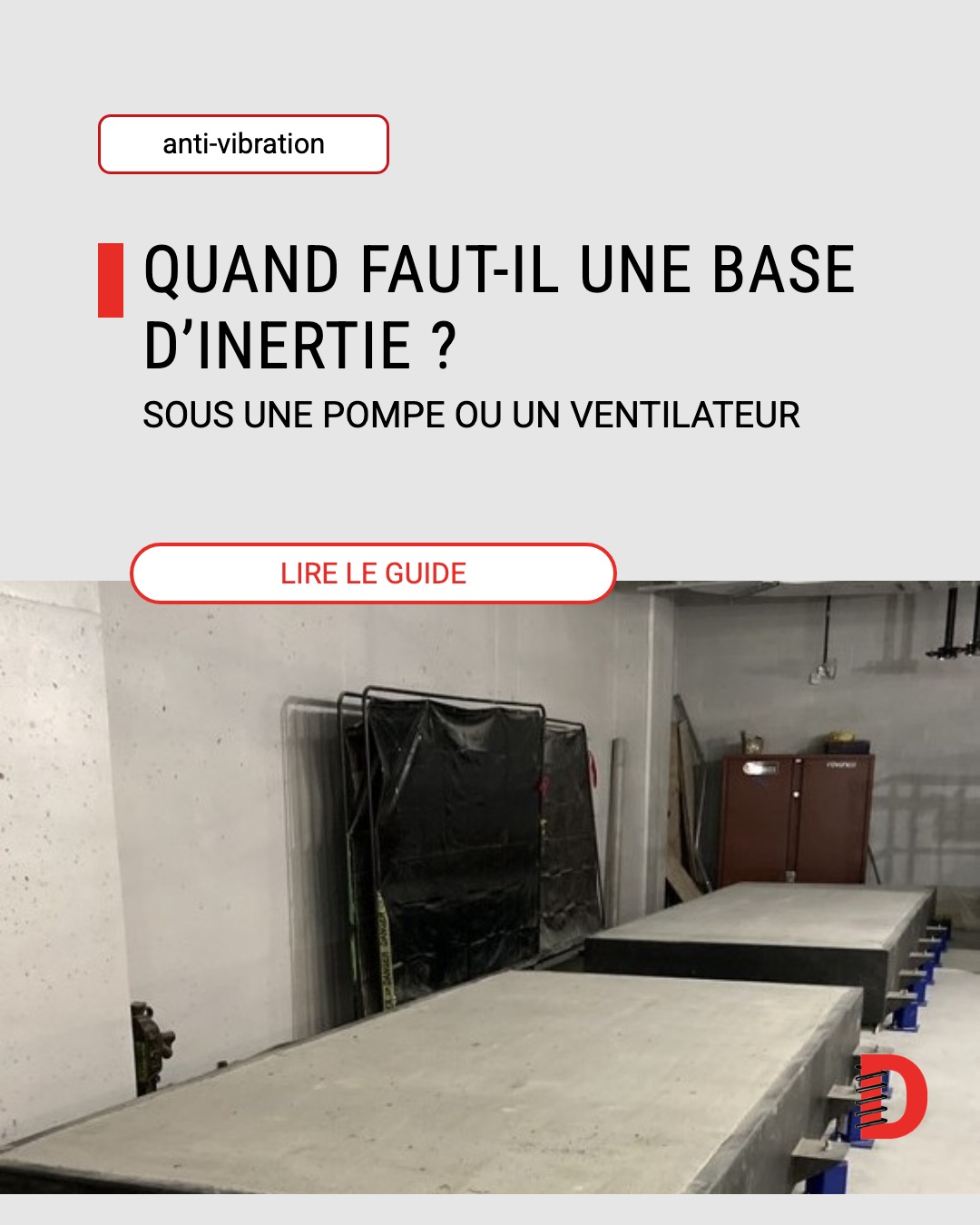
In short: an inertia base is a steel frame filled with concrete, set on spring isolators and installed under mechanical equipment. It is used when the equipment sits on an upper floor, near noise-sensitive rooms, or when it needs a heavy, rigid footing to stay steady on its springs.
What an inertia base does
- It adds mass. The concrete makes the assembly heavier, which reduces the movement of the equipment on its springs.
- It steadies. Weight placed under the equipment lowers the centre of gravity and damps start-up jolts.
- It keeps everything aligned. The pump and its motor sit on the same rigid footing.
- It reduces the vibration transmitted to the building structure, together with the isolators it rests on.
Situations where one is called for
- A pump installed on an upper floor rather than on a slab on grade.
- Equipment located near offices, dwellings, classrooms or any sensitive room.
- A fan or compressor whose vibration could travel into the structure.
- Several pieces of equipment that must share one footing.
On a construction project, the engineer decides and states it in the specification, in the vibration control section.
Single base or common base
A single inertia base carries one piece of equipment. A common base carries several, for example two pumps side by side.
What Deflection supplies
The Deflection inertia base is custom-built in Quebec, from the dimensions and data of your equipment:
- a structural steel frame, with its reinforcing bars;
- isolator brackets welded to the frame;
- seismic spring isolators, calculated for the equipment and supplied with the base.
The concrete is poured on the job site by the contractor.
Frequently asked questions
What do you need for a quote?
The dimensions, model and weight of the equipment. We reply within 24-48 business hours.
Does an inertia base replace the isolators?
No, the two go together. The base provides mass and rigidity; the spring isolators underneath are what stop the vibration from being transmitted.
Also read: how to choose a vibration isolator.